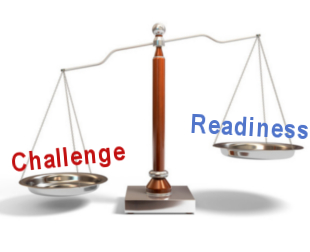
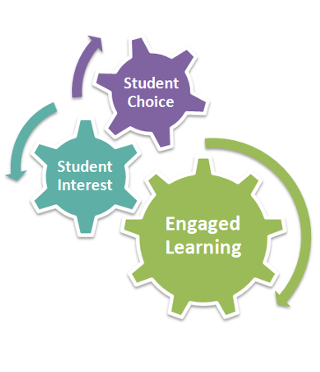
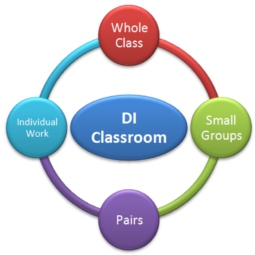
Dr. Carol Ann Tomlinson defined differentiated instruction visually in her book, The Differentiated Classroom, to include 6 Components of Instruction and Assessment. (See Visual below) This visual definition helps give structure to how to use DI in the classroom, simplifying it in a way. In general, each component addresses different areas of learning and is broken into two sections. First, there are the instructional components (Content, Process, and Product) which illustrate different parts of instruction that can be modified to meet student needs. You can modify all or specific components alone, but what is important to remember is that they are tied to some student need that has been assessed. This leads to the second section, the student components (Interest, Student Profile, and Readiness). These components represent areas that can be assessed by teachers and help inform how to modify instruction within the classroom. Any and all student components can be used to help teachers adapt their instruction, but at least one must be used in order for real DI to occur.
Read more about each component below, and when you’re ready, follow the links for each to learn about Technology Tools that can help differentiate according to that component.